12 Min Read
Renjith Chembakarayil

In today’s experience-driven economy, a contact center is not just a support function it’s the heartbeat of customer relationships. Whether you're a bank in Dubai, a telecom provider in Riyadh or an e-commerce brand scaling across the GCC, one truth remains constant:
If your contact center goes down, your business goes silent.
And silence, in a competitive market like the UAE and Saudi Arabia, comes at a cost; revenue loss, damaged trust and regulatory risk. This is where Disaster Recovery (DR) and Business Continuity Planning (BCP) become critical. But here’s the challenge: most businesses think they are prepared, until an actual disruption proves otherwise.
This blog breaks down in simple terms what DR and BCP really mean for contact centers, why traditional approaches fall short and how INVOQ CX Resilience Model is redefining the call center business continuity solutions for both cloud-first and on-premises organizations in the MENA region.
What is Disaster Recovery and Business Continuity in Contact Centers?
Disaster Recovery (DR): This is your reactive technical strategy. It focuses on the speed and efficiency with which your systems can be restored following a critical failure, such as a hardware crash, ISP outage or cyberattack.
Business Continuity Planning (BCP): This is your proactive operational strategy. It ensures that your business functions remain active and uninterrupted during a crisis, allowing your team to keep working while the underlying issue is being resolved.
The Strategic Priority: For modern contact centers, BCP is the ultimate objective, maintaining a seamless experience, while DR serves as the essential safety net to get primary systems back online.
What is the Difference Between Business Continuity and Disaster Recovery?
To better understand how this look in practice, consider the varying levels of protection they provide:
The DR Scenario: A technical restoration. An organization might say, "Our systems were hit, but we can have everything fully restored and operational within two hours."
The BCP Scenario: Total operational resilience. An organization would say, "The system failed, but our failover was so seamless that our customers never noticed a disruption."
For contact centers, BCP is the goal. DR is the backup plan.
Why This Matters More in the MENA region?
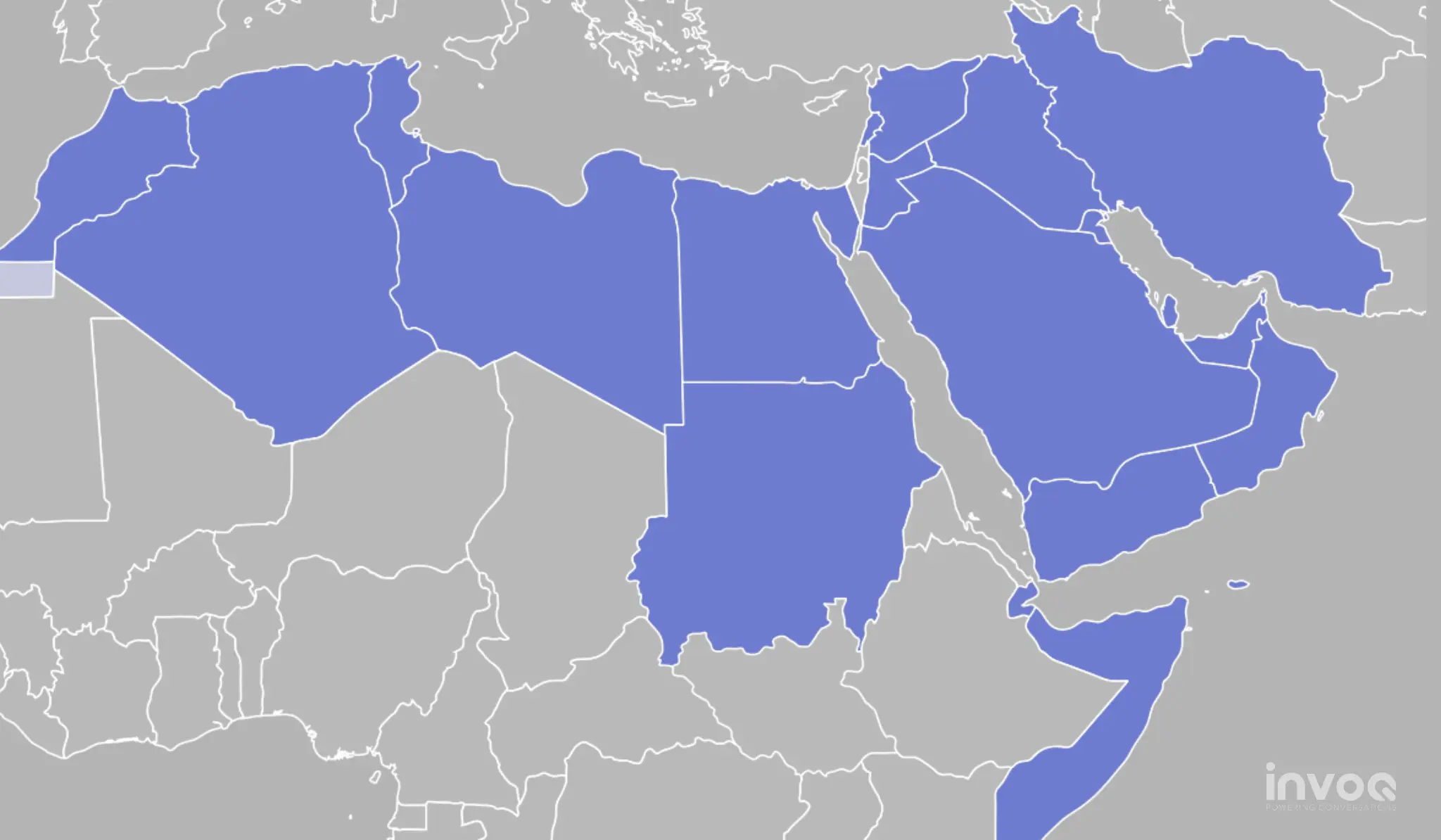
The MENA region is rapidly digitizing, especially in sectors like banking, government services, healthcare and retail. According to industry data, the Middle East CCaaS market is growing at a ~12.9% CAGR, driven by:
Omnichannel customer expectations
But with this growth comes higher risk exposure:
Dependence on internet connectivity
Increasing cyber threats
Strict data residency laws
Customer expectations for 24/7 availability
In short, downtime is no longer acceptable.
The Hidden Risks in Traditional Contact Center Models
Cloud Based Contact Centers: Not as “Always-On” as You Think
Contact center as a service is popular, but they come with a critical weakness:
They depend entirely on internet connectivity and third-party cloud uptime.
What can go wrong?
ISP Outages: A localized or provider-specific internet failure results in a total operational shutdown, halting all internal and external communication.
Cloud Provider Failure: If your primary cloud host goes down, you face a complete loss of customer access, rendering your platform or service invisible to the world.
Regional Latency: Poor connection speeds in specific geographic areas lead to a degraded user experience, frustrating your global audience.
The Bottom Line: These technical failures culminate in a total loss of service, which rapidly erodes customer trust and brand reputation.
On-Premises Contact Centers: Strong but Fragile
On premises systems gives control, but at a cost.
Prohibitive Costs: Building and maintaining your own infrastructure requires a massive upfront investment in hardware and ongoing overhead.
Architectural Complexity: Establishing reliable redundancy is incredibly difficult, requiring intricate configurations to ensure the system doesn't fail.
Physical Vulnerabilities: Your data is susceptible to real-world disasters, such as fires, prolonged power outages or physical security and access breaches.
Scaling Bottlenecks: Unlike the cloud, physical hardware is rigid; it is nearly impossible to scale capacity quickly enough to meet sudden spikes in demand.
Localized Dependency: Ultimately, your physical building becomes a single point of failure. If the facility is compromised, your entire operation goes dark.
The Reality – On premises and Cloud Contact Centers
Model | Strengths | Weaknesses |
|---|---|---|
Cloud-only | Flexibility, Scalability | Internet dependency, External risks |
On-premises | Control, Data Security | High cost, Limited Resilience |
INVOQ CX Resilience Model
INVOQ introduces a hybrid contact center architecture designed specifically for modern MENA businesses. The core idea of the INVOQ CX Resilience Model is “Never rely on a single environment. Always have a live fallback”
Scenario 1: Cloud-First with On-Premises Failover
Perfect for businesses already using cloud solutions but worried about outages.
How It Works:
Your primary system runs in the cloud.
A cold failover node is installed on premises.
If cloud/internet fails, system switches to local operations.
What You Get:
Business continuity even during internet outages.
Full control when needed.
No heavy investment on external infrastructure.
Scenario 2: On-Premises with Cloud Resilience
Ideal for enterprises prioritizing data sovereignty.
How It Works:
Your contact center runs on-premises.
A live cloud standby mirrors operation.
If your facility fails, cloud takes over automatically.
Key Benefits:
No single point of failure.
Minimal disruption (agents don’t lose context).
Fully compliant with local data laws.
How INVOQ CX Resilience Model helps in Business Continuity and Disaster Recovery?

Absolute Operational Continuity: INVOQ eliminates single points of failure. Whether facing a power grid collapse, a major ISP disruption or a localized physical incident, your operations failover automatically without a second of downtime.
Invisible Redundancy: Unlike traditional disaster recovery (DR) that can take hours to restore, INVOQ’s transition is seamless. Calls stay active, agents remain online and customer conversations are never dropped, your clients won't even realize a switch occurred.
Localized Data Compliance: Specifically engineered for the regulatory landscapes of the UAE and Saudi Arabia, INVOQ keeps your data strictly within national borders. You get a unified audit trail and total compliance without the typical administrative headache.
Dynamic Cost Optimization: Stop overspending on "just in case" hardware. INVOQ allows you to scale dynamically, utilizing the cloud for burst capacity while keeping core functions on-premises, ensuring resilience that fits your budget.
Hybrid AI Integration: Experience the "best of both worlds" by keeping your most sensitive data securely on-site while still leveraging the full power of cloud-based AI, automation and advanced analytics.
How to Build a Strong Disaster Recovery and Business Continuity Plan for Contact Centers?
A robust Disaster Recovery (DR) and Business Continuity Plan (BCP) isn't just a technical checklist. It’s an insurance policy for your reputation.
Identify Your Primary Vulnerabilities: Pinpoint your most likely threats, whether they are recurring ISP outages, sophisticated data breaches or localized physical disruptions.
Audit Your Recovery Time Objective (RTO): Be honest about your recovery window. Does it take minutes, hours or days to get back online? In the modern market, anything beyond minutes is a liability.
Evaluate the Customer Experience Impact: If a system failure is visible to your customers, your BCP is insufficient. True resilience means the transition to backup systems is completely invisible to the end-user.
Assess Environmental Redundancy: Determine if you have a dedicated secondary environment. Without a geographically or technically separate failover site, your business remains dangerously exposed.
Verify Regulatory Alignment: Ensure your strategy meets local data residency laws and the rigorous compliance standards required for operating within MENA region.
Final Thoughts
In the fast-paced MENA market, one cannot assume their systems are invincible. Here is why modernizing your approach to resilience is a necessity:
The Reality of Disruptions: Outages occur without warning. In a region where digital transformation is moving at lightning speed, resilience has shifted from a "luxury" to a business requirement.
Beyond the Binary Choice: With INVOQ’s hybrid architecture, you no longer must compromise between the accessibility of the cloud and the security of on-premises hardware.
A Strategy of Certainty: By integrating both environments, you aren't just choosing a technical setup; you are securing total operational continuity and control.
Unshakable Confidence: Ultimately, this approach ensures that no matter what technical or physical crisis arises, your brand remains online, your data remains protected and your customer trust remains intact.
Frequently Asked Questions (FAQs)
1. What is the difference between Disaster Recovery and Business Continuity?
Disaster Recovery focuses on restoring systems after failure, while Business Continuity ensures operations continue without interruption.
2. Why are cloud-only contact centers risky?
They depend heavily on internet connectivity and third-party uptime, making them vulnerable to outages.
3. Is on-premises more secure than cloud?
It offers more control but lacks flexibility and requires expensive infrastructure to ensure resilience.
4. What is a hybrid contact center?
A combination of cloud and on-premises systems designed to deliver both flexibility and reliability.
5. How does INVOQ ensure zero downtime?
By enabling automatic failover between cloud and on-premises environments without disrupting operations.
6. Is this solution compliant with UAE and Saudi data laws?
Yes, INVOQ ensures in-country data storage and compliance with local regulations.
7. Can small businesses benefit from this?
Absolutely. INVOQ CX Resilience model reduce infrastructure cost and improves reliability.
8. What happens to customer data during failover?
Data remains secure, synchronized and accessible across both environments.
Contact us to see how INVOQ can give an
effortless experience for your customers