10 Min
Umaima Suleman
What Is Call Center Sentiment Analysis and Why Does It Matter Now?
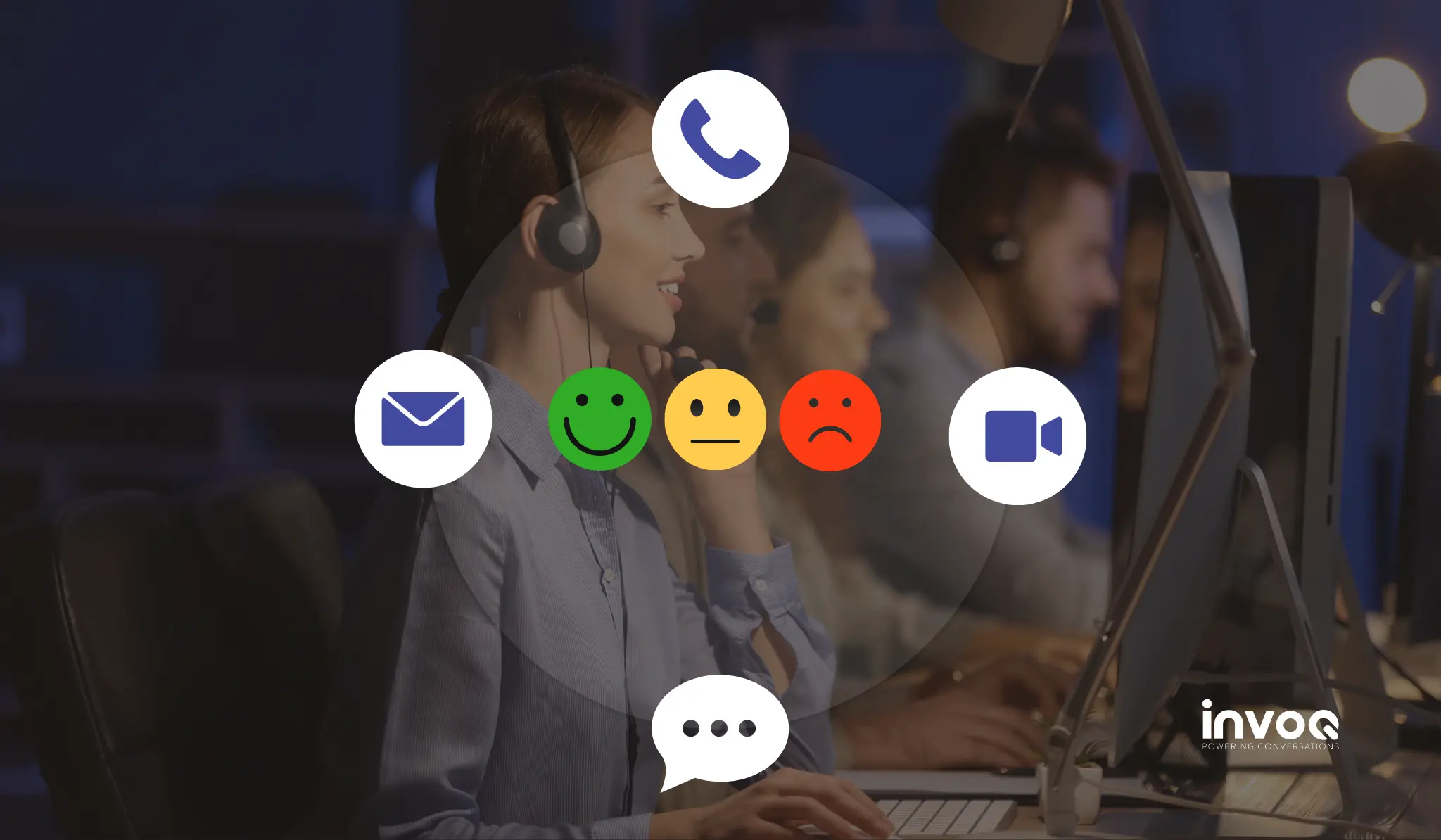
Sentiment analysis is the use of artificial intelligence and natural language processing (NLP) to detect and interpret the emotional tone within a conversation. In a contact center context, that means every call, chat or digital interaction is automatically evaluated in real time or post-call to determine whether a customer is satisfied, neutral or frustrated and how that emotional state shifts as the conversation progresses. Rather than relying on a customer to volunteer their feelings after the fact, the system reads the interaction itself.
The relevance of this technology is no longer theoretical. According to a report by Microsoft, nearly 95% of customer interactions are projected to be processed through sentiment analysis tools, enabling contact center agents to tailor their responses based on customer emotions. Separately, Salesforce that 68% of service teams now use AI tools like sentiment analysis to improve response quality and companies using real-time sentiment insights report up to a 30% improvement in first-call resolution and a 25% reduction in escalations.
For enterprises running large-scale contact center operations across the GCC; managing multilingual agent teams, navigating sector-specific compliance requirements and serving a customer base with high and rising service expectations; these numbers represent a meaningful operational shift. And yet, the majority of organizations in the region are still making CX decisions based on one of the most structurally flawed tools available: the post-call survey.
The problem is well-documented. Average CSAT survey response rates are often in the single digits and those customers who do respond typically had either a very positive or a very negative experience. The moderate majority; the customers whose routine interactions quietly determine long-term loyalty and churn go largely unheard. In the 2024 State of Customer Service and CX Report, 42% of consumers said they avoid completing a CSAT survey after a negative experience because they don't want to spend more time interacting with that company; which means dissatisfied customers are systematically underrepresented in the very data meant to capture dissatisfaction.
Response bias compounds the problem further. A customer who experienced a slow but ultimately resolved issue may rate the interaction harshly due to recency of frustration. Another who received fast but factually incorrect information may score it positively because the agent was personable. The survey captures emotional impression in the moment, not the actual quality of what happened on the call.
Understanding what customer experience truly entails and how far it extends beyond a single satisfaction score, is the foundation of any serious enterprise CX strategy. Call center sentiment analysis offers a fundamentally different approach: automated, objective coverage of 100% of conversations, with no survey required and no customer opt-in needed.
Defining the Technology: Rule-Based vs. AI-Powered Models
Not all sentiment analysis is built the same.
Enterprise buyers frequently encounter vendors who use the term loosely, applying it to systems that are, in practice, little more than keyword detection engines dressed up with modern terminology. The distinction matters enormously; when you're making infrastructure decisions for a high-volume contact center environment.
Rule-Based Systems: The Limitations of Binary Logic
Rule-based sentiment systems work on a straightforward principle: flag specific words or phrases as positive, negative or neutral and compile a score accordingly. If a customer says 'unhappy,' the system registers a negative signal. If they say 'great,' it registers positive. On the surface, this sounds functional. In practice, it falls apart quickly.
Consider a phrase like: 'I'm not unhappy with the service, but the billing issue still isn't resolved.' A keyword-matching system flags 'unhappy' as negative and may entirely miss the nuanced satisfaction embedded in the opening clause, along with the critical operational problem buried in the second half. These systems cannot process context. They cannot detect sarcasm. They have no understanding of structural pauses, hesitations or the shift in a caller's tone that signals escalating frustration before any negative words have even been spoken.
In the GCC specifically, where conversations frequently blend formal and informal registers, where Arabic and English are sometimes interchanged, these rule-based systems produce unreliable results.
AI-Powered NLP: Reading the Full Conversation

Modern AI-powered call center sentiment analysis operates at a categorically different level. Rather than scanning for isolated keywords, these systems process the full conversational arc using natural language processing (NLP) models and, increasingly, large language models (LLMs) trained on diverse linguistic data.
These systems evaluate tone, not just vocabulary. They track intensity shifts; a gradual escalation of frustration, a sudden change in a customer's communication pace, the softening of language when an agent successfully de-escalates. They can distinguish between genuine dissatisfaction and rhetorical frustration. They understand that the same words carry entirely different meanings in different conversational contexts.
Advanced platforms also process acoustic signals in voice interactions: variations in pitch, speaking tempo, silence duration and the presence of talking-over behaviors that typically indicate rising tension. Combined with lexical analysis, this produces a sentiment reading that reflects the actual emotional state of the interaction, not just a filtered keyword summary.
The Architecture of Enterprise Sentiment Scoring
Understanding how sentiment scores are built and how they should be interpreted is critical for executives evaluating platforms or trying to understand what their reporting dashboards are actually telling them.
Composite Scoring: Beyond a Single Number
Enterprise-grade sentiment analysis compiles scores across the full duration of a call, typically on a normalized scale of 0 to 10. Scores are derived by evaluating both customer and agent sentiment at defined intervals, tracking how sentiment shifts in response to specific triggers; a hold time, a policy explanation, a pricing conversation and how the interaction ultimately resolves.
A basic implementation might average these data points into a single composite score. More sophisticated systems apply weighted analysis and this is where meaningful insight starts to separate enterprise platforms from simpler tools.
Weighted End-of-Call Sentiment
Research into customer satisfaction consistently shows that how an interaction ends carries more weight in the customer's memory than how it began. A caller who opens a conversation frustrated but closes it satisfied is, from a loyalty standpoint, in a meaningfully better position than one whose frustration remained unresolved. Weighted sentiment models account for this by placing greater analytical emphasis on end-of-call sentiment; effectively measuring an agent's ability to bring an interaction to a satisfactory conclusion regardless of how it started.
This matters for QA and coaching frameworks. An agent who consistently improves customer sentiment over the course of a conversation is demonstrating a skillset that average-score metrics will never capture. Weighted analysis surfaces that performance explicitly.
Real-Time Sentiment: From Post-Call Review to Live Intervention
Post-call sentiment scoring is valuable. Live sentiment analysis is transformational for enterprise contact center management.
Real-time sentiment monitoring enables supervisors to respond to escalations as they unfold rather than reviewing them hours later. When a customer's sentiment score drops sharply during an interaction, managers can intervene through call whispering — coaching the agent live without the customer hearing or execute a supervisor barge when the situation requires direct escalation. These capabilities convert sentiment data from a historical reporting metric into an operational tool, one that directly influences the outcome of individual calls in progress.
For GCC enterprises managing hundreds or thousands of concurrent interactions across multiple locations, real-time sentiment infrastructure is not a luxury feature. It is, increasingly, a baseline operational requirement.
Strategic B2B Benefits for Contact Centers in the MENA Region
The business case for call center sentiment analysis extends well beyond improving individual interaction quality. For enterprise CX leaders, the most compelling returns come from the systematic, scalable applications; the ones that change how an entire operation is managed rather than how a single call is handled.
Comprehensive Automated QA: From 2% to 100%
Manual QA processes in most large contact centers evaluate somewhere between 1% and 3% of total call volume. This is not a resource problem so much as a structural one: listening to full call recordings at scale requires more hours than most QA teams can realistically commit and even with generous sampling protocols, the coverage is insufficient to produce statistically reliable conclusions about agent or process performance.
Automated sentiment analysis changes this completely. Every conversation is evaluated, scored and tagged — not on a best-effort sampling basis, but across 100% of call volume. This eliminates evaluation bias introduced by cherry-picked samples. It surfaces outliers; both positive and negative that manual review would never reach. And it produces consistent, objective scoring that doesn't fluctuate based on which QA analyst is reviewing a call on a given day.
For compliance-sensitive industries operating in the GCC, such as banking, insurance and telecommunications, this level of coverage also supports audit and regulatory requirements far more robustly than manual sampling ever could.
Targeted Agent Coaching: Replacing Intuition with Precision
Traditional performance reviews ask broad questions:
Is this agent performing well?
Where do they need development?
Sentiment analytics enable a fundamentally more specific line of inquiry. Leaders can draw on reporting dashboards to answer questions such as:
Which agents consistently de-escalate highly negative interactions and what specific behaviours do they use to do so?
At what point in the conversation does sentiment typically shift from neutral to negative and is that shift product-driven or process-driven?
What agent behaviors; a scripted phrase, a delay in offering a resolution path, repeated hold transfers are most reliably correlated with sentiment deterioration?
Coaching sessions become targeted rather than general. Development resources are directed toward demonstrated, measurable weaknesses rather than assumed ones. High performers in emotional intelligence become identifiable and documentable, which matters considerably for internal mobility decisions and team structuring.
Invoq's unified platform is built to surface exactly these insights; connecting raw sentiment data to agent-level performance reporting in a way that gives both frontline managers and senior CX leaders the visibility they need to act with confidence.
Uncovering Voice of the Customer Trends in the GCC Market
Beyond individual interaction quality, aggregating sentiment signals across thousands of conversations produces a Voice of the Customer dataset that is both richer and more representative than any survey program could generate. Patterns that no individual QA reviewer would ever detect; a spike in negative sentiment around a specific billing cycle, a consistent emotional downturn in conversations involving a particular policy change, growing frustration with digital self-service prompts; become visible and measurable.
In the GCC market specifically, these patterns often reflect regional dynamics that organizations with generic CX programs simply miss. Seasonal service demand shifts, localized product or pricing sensitivities and evolving customer expectations around digital channel integration all manifest in sentiment data long before they show up in formal complaints or executive escalations.
Comprehensive business communication solutions that integrate sentiment analytics with broader CX infrastructure allow enterprises to treat these signals as operational intelligence rather than noise, making proactive adjustments before trends become problems.
Operational Implementation and Regional Nuances
Deploying call center sentiment analysis in a GCC enterprise context requires more than selecting a capable platform. There are operational and regional factors that should inform implementation from the outset.
Multilingual and Dialect Complexity
The GCC's linguistic landscape is genuinely diverse. Standard Arabic, Gulf Arabic, Egyptian Arabic and Levantine Arabic are all in active use across contact centers in the region, alongside English, Hindi, Urdu and Tagalog; sometimes within a single call. An AI sentiment model trained primarily on US or UK English will produce degraded accuracy when applied to this environment. Enterprise buyers should scrutinize vendor documentation carefully on dialect training, multilingual model coverage and the handling of code-switched conversations where speakers move between languages mid-sentence.
This is not a minor technical footnote. Sentiment model accuracy degrades meaningfully when linguistic context is misread and inaccurate data feeding into QA frameworks or coaching programs can produce worse outcomes than no data at all.
Compliance, Data Security and Regulatory Alignment
Enterprises operating across the UAE, KSA, Qatar and other GCC markets are subject to a layered set of data governance requirements, including those relating to the recording, storage and processing of customer interaction data. Any sentiment analysis platform processing voice data must align with applicable frameworks; including TDRA guidelines in the UAE, SAMA regulations in Saudi Arabia and sector-specific compliance requirements for financial services and healthcare.
Implementation teams should validate data residency configurations, encryption standards and access control mechanisms before rollout and ensure that any third-party AI processing components are compliant with regional data handling obligations.
Moving from Observation to Intelligence
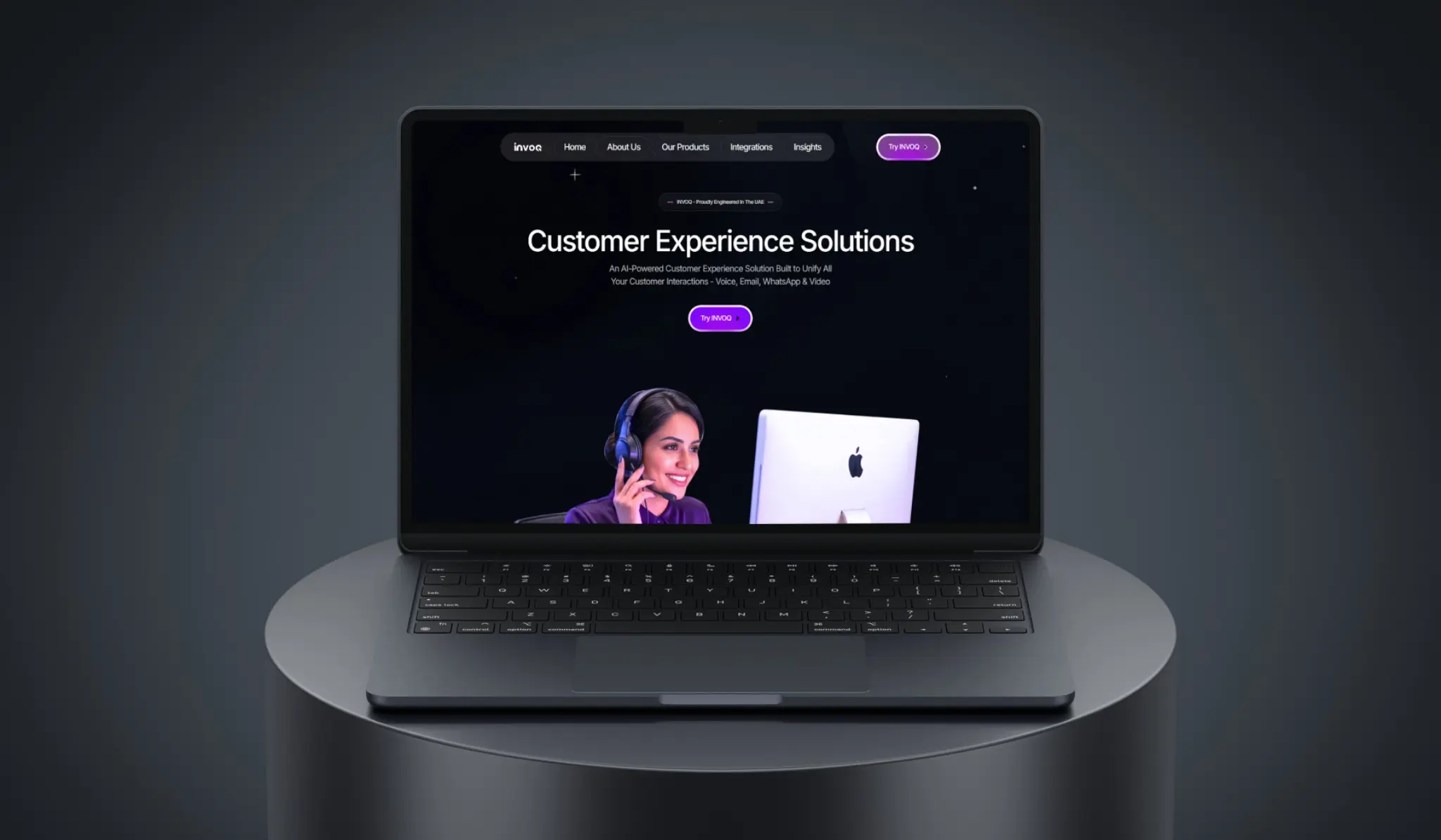
The shift from post-call surveys to automated call center sentiment analysis represents a maturation in how enterprise CX is managed; from passive data collection to active, real-time conversational intelligence. For GCC enterprises, the gap between knowing that customer experience needs to improve and having the operational data to act on it has historically been wide. INVOQ closes that gap directly.
The platform's Customer Insights dashboard gives CX leaders a live, unified view of everything that matters; without waiting for end-of-day reports or manually pulling call samples. A real-time Service Level gauge, Happiness score, First Contact Resolution rate and Escalation Risk percentage sit alongside each other on a single screen, meaning a supervisor at 10 AM has the same situational clarity about their operation that would previously have taken until 6 PM to compile.
The Sentiment Distribution view breaks down every conversation into positive, neutral and negative segments, while the Sentiment By Hour chart surfaces exactly when sentiment shifts occur across the working day; letting operations teams correlate emotional dips with staffing patterns, queue volumes or specific product issues. If negative sentiment spikes between 11 AM and 1 PM on billing-related calls, that signal is visible and actionable in near real-time, not buried in a weekly QA report.
Where INVOQ's design reflects a genuine understanding of enterprise contact center dynamics is in the Happiness Trend tracker. Watching customer happiness move directionally over a session, not just as a static score allows managers to evaluate whether interventions are working and whether resolution quality is improving or declining across the day. The Most Talked About word cloud adds a further layer: topic clustering from live conversations that automatically surfaces what customers are raising most frequently, without requiring manual tagging or thematic coding by a QA team.
For enterprises operating across multiple channels, the By Channel sentiment breakdown ties emotional data to media type voice, chat and beyond giving channel managers the evidence they need to make resourcing and routing decisions that are grounded in actual customer experience data rather than assumption.
Taken together, these capabilities represent what enterprise sentiment analysis should look like in practice: not a bolt-on reporting feature, but an integrated intelligence layer that informs decisions at every level of the organization; from the agent handling a live call to the CX Director setting quarterly performance strategy.
For GCC organizations ready to move beyond surveys and manual sampling, INVOQ provides the infrastructure to run a contact center where every conversation counts, every trend is visible and every coaching decision is backed by data.
To explore how Invoq supports enterprise contact centers across the MENA Region, fill the form below.
Contact us to see how INVOQ can give an
effortless experience for your customers