Umaima Suleman
There is a moment every customer service leader in the region knows well.
A customer picks up the phone frustrated, in a hurry, dealing with something that genuinely matters to them. Maybe it is a blocked bank card at 11pm. Maybe it is a delayed shipment the day before a project deadline. Maybe it is a government service inquiry they have been putting off for weeks.
They dial in. And then it starts.
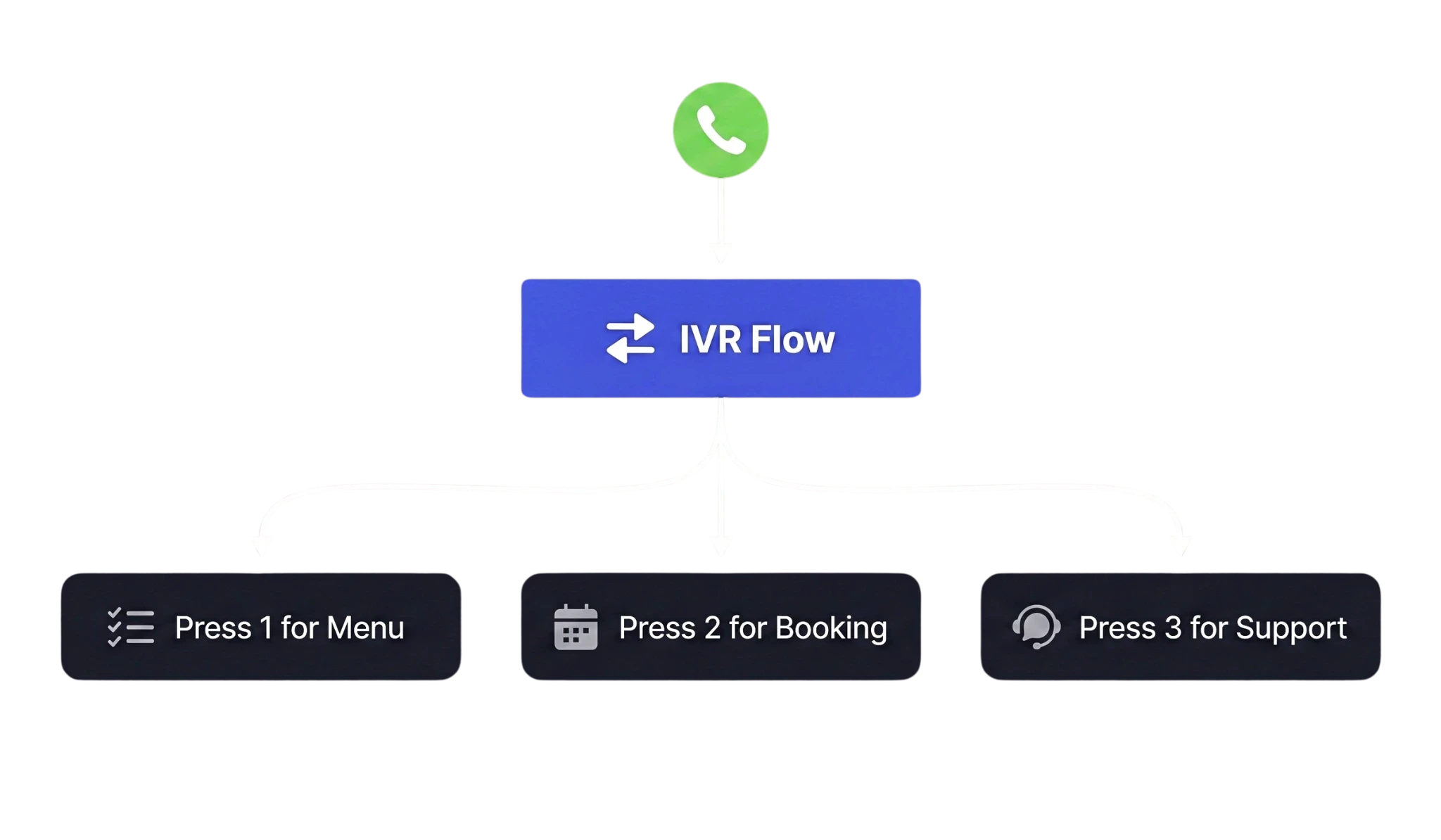
Press 1 for Arabic.
Press 2 for English.
Press 3 for Billing.
Press 4 to return to the main menu.
By the time they reach a human, their patience is gone. And so, in many cases, is their trust in your brand.
This is not a technology problem. It is a customer experience problem. And it is one that far too many enterprises across the UAE, Saudi Arabia and the wider GCC are still living with today.
Why Voice Still Matters Even in a Digital-First World?
It might be tempting to assume that younger, digital-savvy customers have moved away from phone support entirely. The data tells a different story.
Across the MENA region, voice remains one of the most trusted channels for high-stakes interactions. When something goes wrong — a financial dispute, a medical appointment, an urgent logistics issue ; customers do not reach for a chatbot. They pick up the phone. They want to speak. They want to be heard.
The challenge is not the channel. The challenge is what happens when they call.
For many enterprises, that experience is still built on infrastructure designed in a completely different era of customer service. Traditional IVR systems were built to manage call volume, not to serve customers. They were built around what was technically possible, not what customers actually needed.
The result is a system that works for the business and frustrates everyone else.
The Problems With Traditional IVR
Think about what we ask customers to do when they call most enterprise support lines today.
We ask them to listen to a menu of options that may or may not match their situation. We ask them to remember a number and press it. We ask them to listen again, press again and navigate a tree of choices that was designed for the most common scenarios — not for their specific scenario.
And if their issue does not fit neatly into Option 1, 2 or 3? They press 0 and hope for an agent. Or they hang up. The irony is that customers almost always know exactly what they need when they call. They just cannot say it.
"I need help with a delayed international transfer." That is clear. That is specific. But a traditional IVR cannot hear it, interpret it or act on it. So instead, the customer is routed through billing, then transfers, then general inquiries, repeating themselves at every step.
For enterprises in the MENA region, this problem carries additional complexity. Your customer base is not monolithic. A single contact center may serve customers speaking Arabic, English, Hindi, Urdu or Malayalam, sometimes switching between languages within a single sentence. Traditional IVR was simply never built for that reality.
What Conversational IVR Actually Does Differently?
Conversational IVR is an intelligent voice automation system that uses Artificial Intelligence, Natural Language Processing, Speech Recognition & Machine Learning to communicate with customers. Conversational IVR does something deceptively simple. Not through rigid command recognition. Not through keyword matching. It lets customers speak naturally and it actually understands them.
When a customer says "my card isn't working," the system does not look for the word "card" in a database. It understands that this person needs help with a payment issue, identifies them from the caller profile, checks their account history and either resolves the issue or routes them, intelligently to the right person.
The difference in experience is significant.
For the customer, the interaction feels faster, more natural and less frustrating. They are not navigating a system. They are having a conversation.
For the business, the impact shows up in the metrics that matter; lower call abandonment, improved first contact resolution, reduced average handling time and better agent productivity because agents are dealing with complex cases instead of routine requests.
How Conversational IVR Works?
Modern Conversational IVR is not a single feature. It is an intelligent layer built from several technologies working together.
Speech Recognition that handles real-world conditions; regional accents, mixed-language conversations, background noise, natural pauses and interruptions. This matters enormously in a market as linguistically diverse as the GCC.
Intent Detection that maps what a customer says to what they actually mean. Three customers might describe the same problem in three completely different ways. A well-trained AI system recognises all three as the same intent and responds accordingly.
Context Awareness that pulls from your CRM, core banking system, ERP or ticketing platform in real time. The system knows who is calling, what their history looks like and what they are most likely calling about, before the conversation even begins.
Intelligent Routing that matches callers to the right agent, team or workflow based on intent, language, sentiment and customer profile, not just which button they pressed.
Self-Service Automation that handles routine tasks entirely without agent involvement: balance checks, appointment bookings, order tracking, payment confirmations, service activations. Available at any hour, without wait times.
Conversational IVR Use Cases Across the MENA Region
The adoption of conversational IVR is accelerating across the MENA region, and it is not hard to see why when you look at the use cases industry by industry.
Banking and Financial Services — Customers calling about blocked cards, suspicious transactions or loan status updates get faster, more accurate responses. Authentication can be handled conversationally and securely. Fraud alerts can be managed without requiring an agent for every interaction.
Government Services — As the UAE and Saudi Arabia advance their smart government agendas, citizen-facing contact centers are evolving rapidly. Conversational IVR supports multilingual citizen engagement, appointment scheduling and public service inquiries at scale directly aligned with national digital transformation goals.
Healthcare — Appointment scheduling, insurance verification, prescription reminders and patient notifications can all be handled through intelligent voice automation. This reduces administrative pressure on clinical staff and improves the patient experience simultaneously.
Retail and E-Commerce — During peak seasons, call volumes spike sharply. Conversational IVR absorbs that volume by handling order tracking, return requests and delivery updates automatically, freeing agents to manage genuinely complex situations.
Logistics and Transportation — In a region where cross-border trade is growing rapidly, logistics providers use AI voice automation for shipment tracking, delivery coordination and real-time customer notifications, without scaling headcount proportionally.
What B2B Decision Makers in the Region Are Actually Evaluating?

If you are a CX leader, COO or digital transformation head in the region, the questions you are likely asking are practical ones.
How disruptive is implementation?
For enterprises running Avaya, Cisco or Mitel environments — which is the reality for many large organisations across the GCC, modern conversational AI platforms are designed to integrate with existing infrastructure rather than replace it. You do not need to start from scratch.
How does it handle Arabic?
This is non-negotiable in the region and a fair concern. The best platforms are built with Arabic NLP capabilities and are trained on Gulf dialect variations, not just Modern Standard Arabic. Language quality directly determines customer experience quality.
What does the ROI story look like?
The financial case typically rests on three areas: reduced cost-per-contact through automation, improved agent utilisation and reduced customer churn from better service experiences. Organisations typically begin seeing measurable impact within the first few months of deployment.
How do we maintain the human element?
This is the right question to ask. The goal of conversational IVR is not to eliminate human connection, it is to make human connection available where it matters most. By automating what does not require human judgment, you free your teams to focus on the interactions that genuinely do.
Why Conversational IVR Matters for the MENA Region?
The MENA region is experiencing one of the fastest digital transformation movements globally. Organizations are investing heavily in:
AI adoption
Digital banking
Customer experience modernization
Omnichannel engagement
At the same time, customer expectations continue to rise. Customers now expect:
Instant service
Personalized engagement
Multilingual support
Seamless interactions
Minimal effort experiences
This is why conversational IVR is becoming a strategic investment rather than just a telephony feature. Modern enterprises are increasingly evaluating voice automation as part of their broader CX transformation strategy.
How INVOQ Supports the Evolution of Conversational IVR?
Modernising your voice channel does not have to mean a complete overhaul of everything you have built.
For many organisations, the most practical path forward is to start with high-volume, high-friction scenarios; the calls that are most common, most repetitive and most likely to frustrate customers and apply conversational intelligence there first. The results build the business case for broader transformation.
Platforms like INVOQ are designed with this kind of incremental approach in mind, helping enterprises in the region move toward AI-powered customer engagement and working within the existing communication environments.
The shift from traditional IVR to conversational IVR is, at its core, a shift in philosophy. From a system designed for operational convenience to an experience designed around the customer. From a menu of options to a genuine conversation.
Your customers have always been trying to tell you what they need. The question is whether your technology is finally ready to listen.
If you are evaluating conversational AI for your contact centre operations across the UAE, Saudi Arabia or the wider GCC, we would be glad to walk through what this looks like in practice for your specific environment.
Contact us to see how INVOQ can give an
effortless experience for your customers