8 Min Read
Renjith Chembakarayil

In today’s experience-driven economy, how organizations communicate with customers is just as important as what they offer. This is where the contact center plays a mission-critical role. For SMEs and large enterprises across the MENA region spanning banking, government services, outsourcing and digital-first businesses; a modern contact center is no longer a call-handling unit. It has evolved into a strategic engagement hub that connects conversations to measurable business outcomes. This guide explains what a contact center is, how it has evolved, its core operating models, key functions, real-world use cases and how AI-driven technologies are shaping the future of customer engagement.
What Is a Contact Center?
A contact center is a centralized platform designed to oversee and coordinate all forms of customer engagement across multiple channels such as voice calls, WhatsApp, email, chat, video and digital messaging through a unified system. In simple terms, a contact center enables organizations to manage conversations, resolve customer needs and drive outcomes across every interaction point. Unlike traditional call centers, modern contact centers are cloud-ready, omnichannel by design and increasingly powered by AI technologies such as conversational IVR, real-time agent assistance and conversation intelligence.
Call Center vs Contact Center: What’s the Difference?
A call center manages customer interactions through voice calls alone. A contact center supports multiple communication channels while maintaining a single customer context.
Feature | Call Center | Contact Center |
|---|---|---|
Channels | Voice Only | Voice, WhatsApp, Chat, Email, Video |
Customer Context | Limited | Unified customer journey |
Scalability | Hardware-based | Cloud and AI-driven |
Best for | Basic support | Sales, support, service and engagement |
In the MENA region, where customers expect fast responses, multilingual support and digital-first engagement, contact centers are the preferred operational model.
Contact Center Operating Models
Modern enterprises typically define contact centers using three clear dimensions: Interaction flow, Channel strategy and Deployment model.
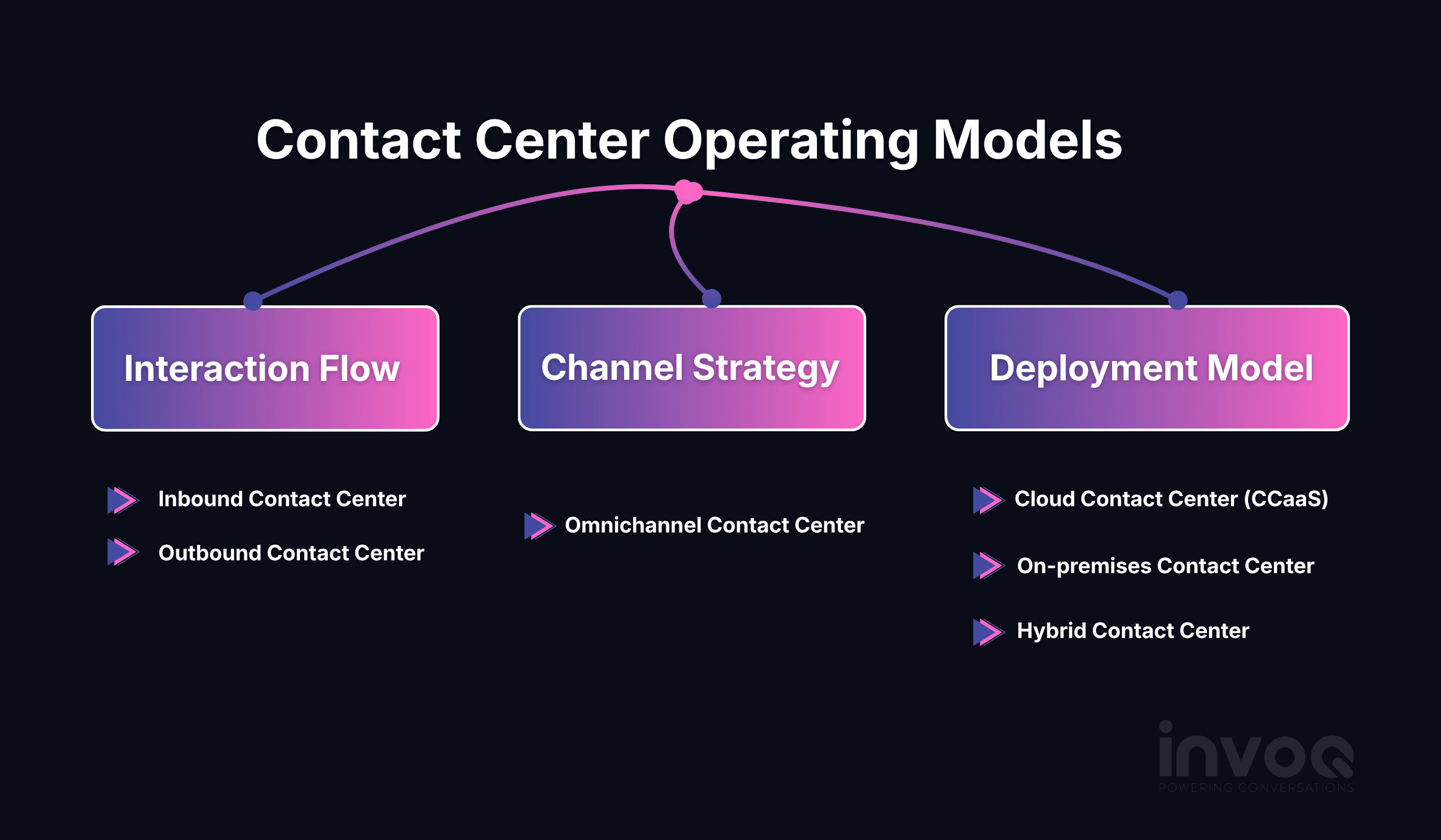
By Interaction Flow
1. Inbound Contact Center
Inbound contact centers manage incoming customer interactions such as support requests, service inquiries, technical assistance and public helplines. They are widely used by banks, telecom operators, government service desks and healthcare providers.
2. Outbound Contact Center
Outbound contact centers focus on proactive engagement using dialer systems. These include predictive, preview and progressive dialers used for sales outreach, lead generation, customer follow-ups, surveys and payment reminders. Outbound contact centers are commonly used by sales teams and outsourcing companies.
By Channel Strategy
3. Omnichannel Contact Center
An omnichannel contact center unifies all customer interactions into a single interface. Agents view the complete interaction history regardless of whether the conversation began on WhatsApp, continued over email or concluded via voice. This approach is especially important in the MENA region, where WhatsApp and voice remain dominant alongside email and web chat.
By Deployment Model
4. Cloud Contact Center (CCaaS)
Cloud-based contact centers commonly referred to as Contact Center as a Service (CCaaS), offer faster deployment, reduced infrastructure dependency, operational scalability and support for remote teams.
5. On-premises Contact Center
On-premises contact centers are deployed within an organization’s own infrastructure. They offer greater control over data, security policies and system customization. These deployments are often preferred by regulated industries, government entities and organizations with strict compliance or data residency requirements.
While each contact center model serves different operational needs, platforms like INVOQ are built to support omnichannel, cloud-based and on-premises deployments, giving organizations the flexibility to scale and adapt as their business evolves.
Key Functions of a Modern Contact Center
A high-performing contact center is built on more than just communication channels. It combines technology, data and intelligence to deliver efficient operations and superior customer experiences.
Below are the core functions of a modern contact center:
1. Intelligent Call Routing
Intelligent call routing automatically directs incoming interactions to the right agent at the right time based on predefined rules and AI-driven logic.
This can include routing based on:
Customer intent or query type
Agent skills and expertise
Language preference (critical for the MENA region)
Customer priority or VIP status
Agent availability and workload
The result is faster resolution, reduced wait times and higher first-contact resolution (FCR).
2. Unified Agent Desktop
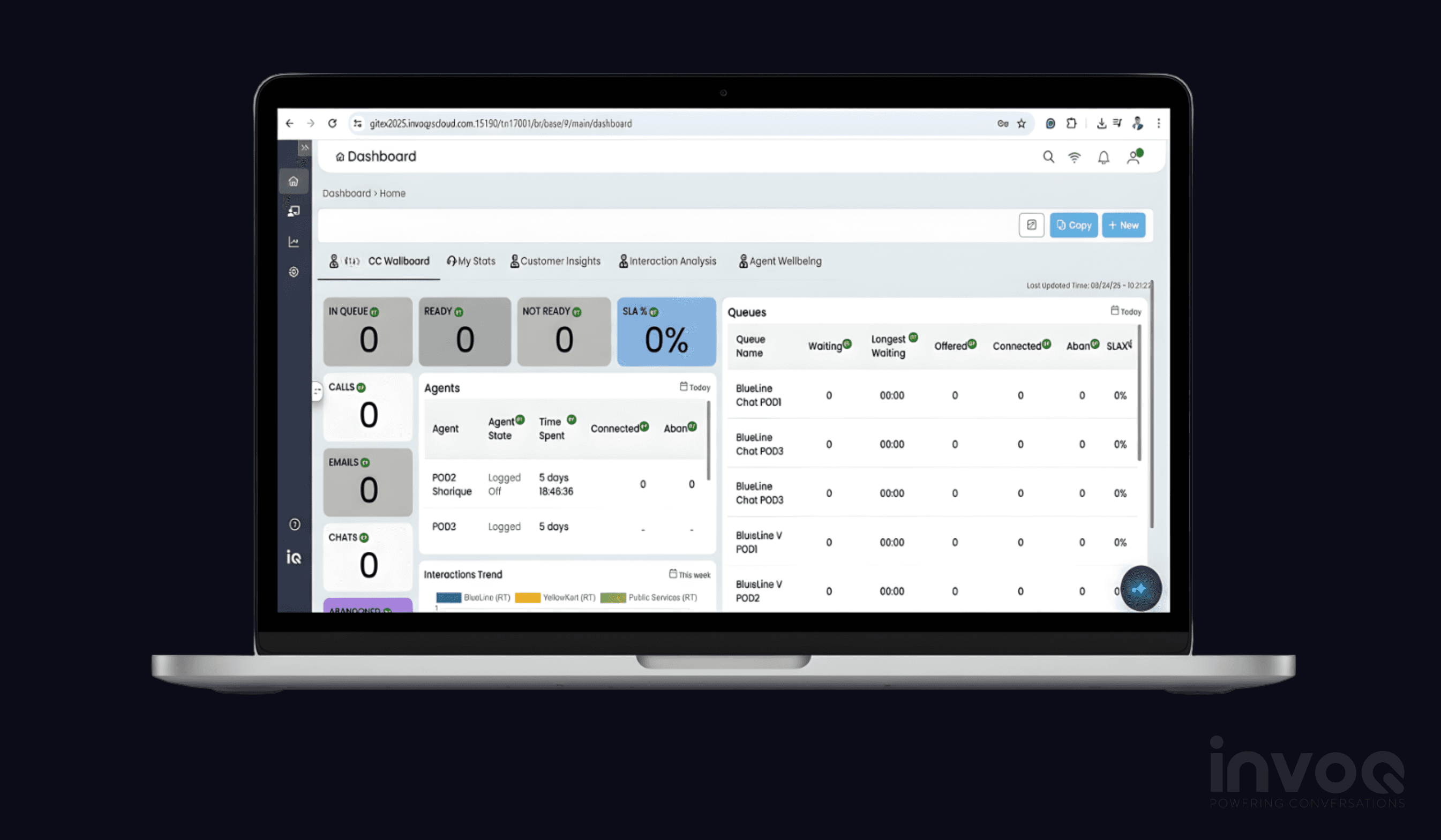
A unified agent desktop provides agents with a single interface to manage all customer interactions; voice, WhatsApp, email, chat and video. Instead of switching between multiple tools, agents can:
View the complete conversation history
Access customer details instantly
Respond across channels from one screen
This improves agent productivity, reduces errors and ensures a consistent customer experience. (INVOQ brings all the customer interactions into one intelligent CX platform)
3. CRM and Ticketing Integration
Modern contact centers integrate seamlessly with CRM and ticketing systems to maintain a single source for customer data.
Key benefits include;
Automatic ticket creation from conversations.
Full visibility into customer history and past interactions.
Faster issue resolution and better follow-ups.
Improved collaboration between sales, service and support teams.
For enterprises, this integration ensures continuity across the customer lifecycle.
4. Quality Monitoring & Call Recording
Quality monitoring tools help organizations maintain service standards and compliance.
These typically include:
Call and interaction recording across channels
AI-based quality scoring
Sentiment and keyword analysis
Supervisor review and coaching tools
This enables continuous agent training, performance improvement and regulatory adherence, especially important for BFSI and government sectors.
5. Performance Dashboards and Analytics
Real-time dashboards provide actionable visibility into contact center performance. Common metrics tracked include:
Call volumes and channel traffic.
Average handling time (AHT).
First-contact resolution (FCR).
Customer satisfaction (CSAT).
Agent productivity and utilization.
Advanced analytics help leadership identify trends, bottlenecks and opportunities for optimization.
6. SLA and Compliance Tracking
Service Level Agreement (SLA) tracking ensures that customer interactions are handled within agreed timelines. Modern contact centers automatically monitor:
Response and resolution times.
Missed or delayed interactions.
Compliance with internal and regulatory standards.
This is especially critical for enterprises in regulated industries such as banking, telecom and public services.
7. Queue Management
Queue management is the strategic organization of customer requests to ensure every interaction is handled promptly. Within contact centers, this involves intelligently routing calls and chats based on agent expertise and current availability, ultimately maximizing operational efficiency while minimizing customer wait times.
8. From Operations to Insights
Modern contact center platforms go beyond day-to-day operations. By combining AI, analytics and unified data, they provide real-time insights that help leadership:
Understand customer behaviour and sentiment.
Measure performance against business goals.
Forecast demand and staffing needs.
Make faster, data-driven decisions.
This transformation turns the contact center from a cost center into a strategic engine for growth and customer experience excellence.
Contact Center Use Cases Across Industries
1. Banking & Financial Institutions
Customer onboarding
Account support
Loan and credit card inquiries
Fraud alerts and verification
Security, compliance and accuracy are critical, making AI-driven monitoring and analytics essential.
2. Government & Public Service Desks
Citizen service requests
Appointment scheduling
Multilingual support
SLA-driven service delivery
Omnichannel contact centers improve transparency, reduce wait times and enhance citizen satisfaction.
3. Outsourcing Companies
Multi-client campaign management
Inbound and outbound services
Performance tracking by client
Rapid onboarding of new agents
Scalability and cost efficiency are key advantages in outsourcing companies.
4. Sales & Lead Generation Teams
Dialer-enabled outreach
Follow-ups across channels
Conversion tracking
CRM-driven engagement
Contact centers help sales teams move faster while maintaining consistent communication.
5. Customer Support & Service Teams
Issue resolution
Complaint handling
Customer retention
Post-service engagement
Unified interactions result in faster resolution and higher customer satisfaction scores.
Contact Centers in the Age of AI and New-Gen Technologies
AI-powered contact centers use artificial intelligence to automate tasks, assist agents, analyze conversations and improve customer experience at scale.
Key AI Capabilities in Modern Contact Centers
Conversational IVR and virtual agents
Agentic AI for guided resolution
Real-time agent assistance
Speech-to-text and transcription
Sentiment and intent detection
Automated summaries and QA scoring
Predictive analytics
AI shifts contact centers from reactive support units into intelligent experience platforms.
Why Omnichannel Contact Centers Matter in the MENA Region?
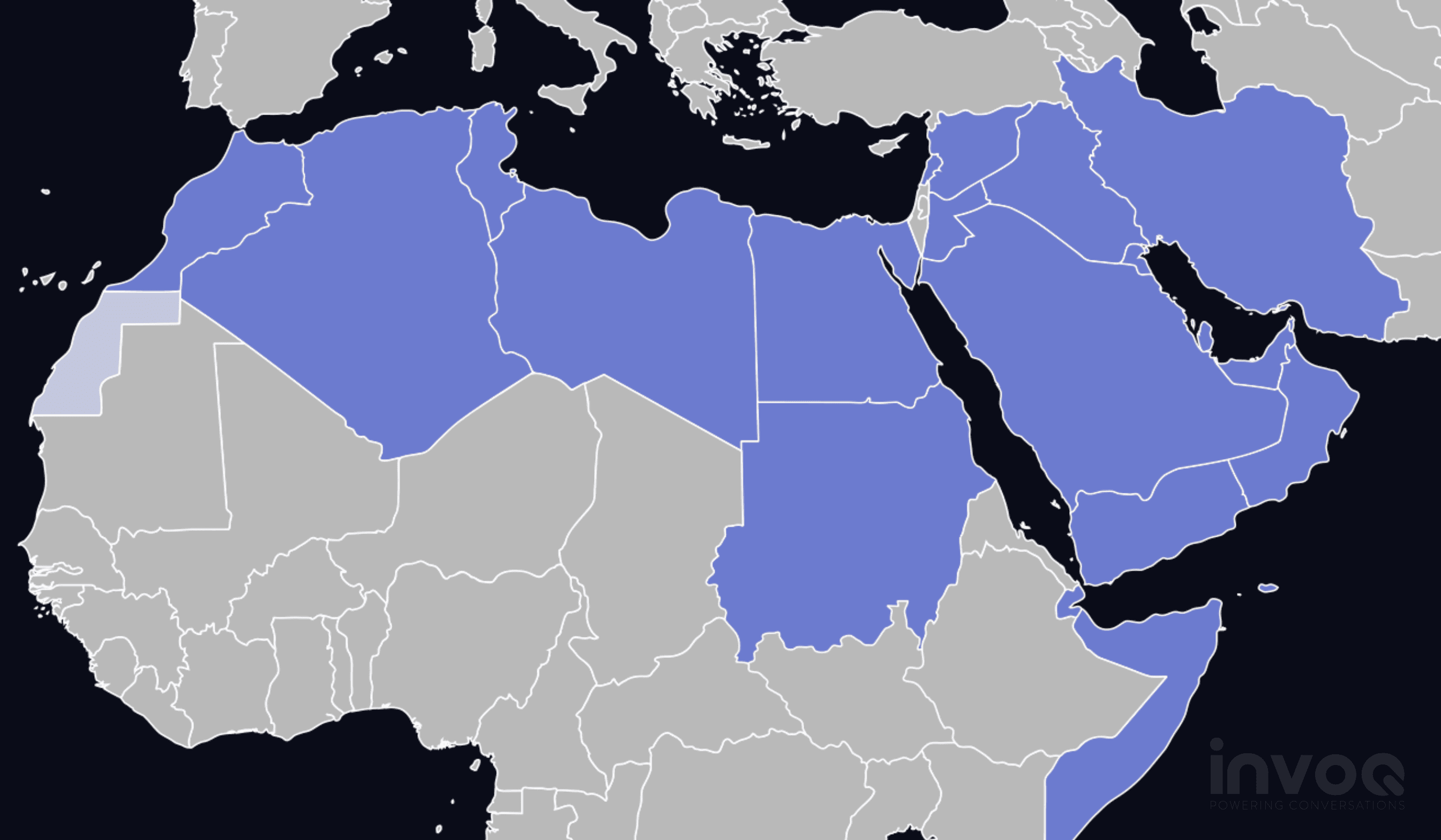
Omnichannel contact centers matter in the MENA region because customers expect fast, seamless and multilingual communication across WhatsApp, voice, email and digital channels.
As enterprises and governments across the Middle East and North Africa accelerate digital transformation, customer experience has become a strategic priority. An omnichannel contact center enables organizations to meet these expectations while maintaining efficiency, compliance and service quality.
Key regional drivers:
1. High WhatsApp Adoption for Business Communication
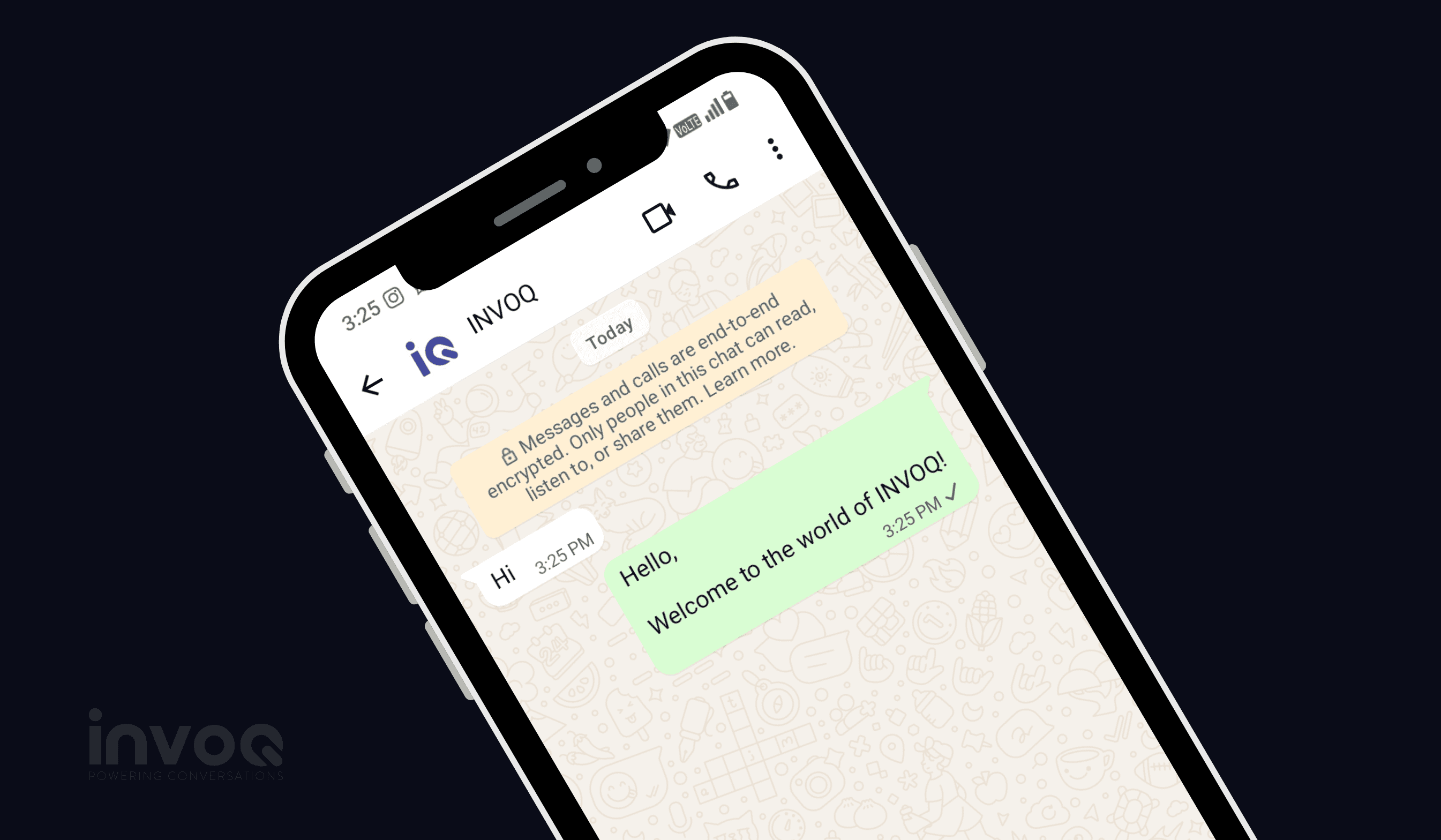
The MENA region has one of the highest WhatsApp usage rates in the world, making it a primary channel for customer interaction. Customers increasingly use WhatsApp for:
Service inquiries and support requests
Appointment scheduling and confirmations.
Status updates and notifications.
Quick issue resolution.
An omnichannel contact center ensures WhatsApp conversations are fully integrated with voice calls, email, CRM systems and support tickets, eliminating data silos and fragmented experiences.
2. Multilingual and Culturally Diverse Customer Base
Enterprises in the MENA region serve a highly diverse population, especially in GCC countries such as the UAE, Saudi Arabia and Qatar. Customer interactions often require support in Arabic, English, Hindi etc. Omnichannel contact centers support: • Language-based routing • Skill-based agent assignment • Consistent service quality across languages • Centralized visibility for supervisors This is essential for industries like banking, healthcare, aviation, retail and government services.
3. Government-led Digital Transformation Initiatives
Governments across the MENA region are investing heavily in smart services, e-government platforms and citizen experience programs. Public service contact centers must deliver: • Unified communication across departments • SLA-driven response and resolution • High transparency and accountability • Secure and compliant interactions Omnichannel contact centers provide the infrastructure required to deliver connected, citizen-centric services at scale.
4. Rising Expectations for Speed, Convenience and Experience
Customers in the MENA region expect:
Near-instant responses
Seamless movement between channels
Personalized, context-aware interactions
Consistent service regardless of touchpoint
With an omnichannel approach, a conversation that starts on WhatsApp can continue a phone call or email without losing context or history.
5. Regulatory and Compliance Requirements
Industries such as banking, telecom, healthcare and public services operate under strict regulatory frameworks. Modern omnichannel contact centers support:
Secure data storage and access controls
Conversation recording and audit trails
SLA and compliance monitoring
Role-based permissions and governance
This allows organizations to balance customer experience with regulatory compliance.
Business Impact for Enterprises in the MENA Region
For SMEs and large enterprises, omnichannel contact centers deliver tangible business benefits:
Higher customer satisfaction and loyalty
Faster issue resolution and reduced handling times
Improved agent productivity and utilization
Better visibility into customer behavior and sentiment
Scalable operations without added complexity
A contact center is no longer just about handling calls. It is about managing experiences, building relationships, and driving measurable outcomes. With the right omnichannel, AI-powered platform, enterprises can turn every conversation into an opportunity.
Looking to Modernize Your Contact Center?
Discover how INVOQ can help your team deliver smarter, faster and more connected customer experiences. Invoq helps enterprises transform conversations into outcomes; with clarity, precision and purpose.
Contact us to see how INVOQ can give an
effortless experience for your customers