11 Min Read
Renjith Chembakarayil

From fragmented conversations to unified engagement, how businesses are redefining communication in the AI-first era. Whether it’s talking to customers, supporting employees or managing operations; clear and timely communication makes everything work better. But today, communication is no longer just about phone calls or emails. It is a crucial factor for better customer experience. Customers expect businesses to be available on multiple channels; WhatsApp, chat, email, voice and they expect quick, seamless responses.
How do you manage all these conversations efficiently without losing quality or consistency?
This is where business communication solutions come in.
What is Business Communication Solution?
In simple terms, business communication solution is a platform that brings all your communication channels into one place. Instead of using separate tools for calls, emails, messaging and video, everything is managed through a single system. This means:
• Your team works from one unified platform.
• All conversations are connected.
• Nothing gets missed or delayed.
More importantly, it helps businesses deliver a smooth and consistent experience to customers; no matter how they choose to connect.
How Has Business Communication Evolved?
The Old Way: Separate Tools
Earlier, businesses used different systems for different tasks:
• Phones for calls
• Emails for communication
• No connection between systems
This often led to confusion, delays and missed information.
The Connected Way: Unified Communication
Businesses then started combining tools into one platform. Teams could handle calls, messages and meetings from a single interface, improving internal collaboration.
The Customer-Focused Way: Omnichannel Communication
As customer expectations grew, businesses needed to go further. Today, customers may:
• Start a conversation on WhatsApp
• Continue email
• Finish on a phone call
Omnichannel solutions ensure that this journey feels continuous and connected, not broken.
The Smart Way: AI-Powered Platforms
Modern communication platforms like INVOQ take things to the next level by adding intelligence. They don’t just connect conversations; they help manage them better through:
• Automation
• Smart routing
• Real-time insights
This turns communication into a powerful business tool, not just a support function.
Key Types of Business Communication Solutions
Today, businesses have access to a wide range of communication tools from chat apps to AI-powered platforms. While the options may seem overwhelming, most solutions fall into four main categories: UCaaS, CCaaS, VoIP/SIP and CRM systems.
Understanding these categories makes it easier to choose the right solution for your business needs.
UCaaS (Unified Communications as a Service)
UCaaS is one of the most widely used communication solutions in modern businesses. It is a cloud-based platform that brings together internal communication tools like voice calls, video meetings, messaging and file sharing into a single workspace.
Instead of switching between multiple apps, teams can collaborate in one place whether they are chatting, joining a meeting or working on shared documents in real time. This makes UCaaS especially useful for organizations with remote or hybrid teams.
Most UCaaS platforms offer:
Team messaging and instant chat
Voice and video calling
Video conferencing and webinars
File sharing and document collaboration
Integration with tools like Microsoft 365
Since UCaaS is typically offered on a subscription basis, it provides a flexible and cost-effective option for businesses looking to scale without heavy upfront investments.
CCaaS (Contact Center as a Service)

CCaaS focuses on customer communication rather than internal collaboration. It is a cloud-based solution that brings all customer interaction channels such as voice, email, chat, social media and SMS into one unified platform.
This allows businesses to manage customer conversations more efficiently while delivering a smooth and consistent experience.
With CCaaS, businesses can:
Handle multiple communication channels from one interface.
Route queries to the right agents based on skills or priority.
Offer self-service options using AI chatbots and IVR.
Track performance through real-time dashboards and reports.
Integrate with CRM systems for better customer context.
CCaaS is particularly valuable for industries like retail, hospitality, healthcare and BPOs, where handling high volumes of customer interactions is critical.
Like UCaaS, CCaaS platforms are usually cloud-based and subscription-driven, making them scalable and easy to deploy.
VoIP & SIP Business Phone Systems
Modern business phone systems are powered by VoIP (Voice over Internet Protocol) and SIP (Session Initiation Protocol), which allow calls to be made over the internet instead of traditional phone lines.
These technologies offer greater flexibility, better call quality and advanced features compared to legacy systems.
Key capabilities include:
High-quality voice and video calls
Ability to manage local and international numbers
Automated call handling and routing
Access across desktop, mobile and IP phones
Option to connect existing systems to the cloud through SIP trunking
VoIP and SIP solutions are ideal for businesses that rely heavily on voice communication, such as sales teams and customer support centers.
They are typically offered on a per-user subscription model, helping businesses reduce infrastructure costs while improving efficiency.
CRM (Customer Relationship Management) Systems
Unlike other communication tools, a CRM system acts as the central hub for managing customer relationships.
It stores all customer information, tracks interactions and helps teams manage sales, marketing and support activities in one place.
With a CRM system, businesses can:
Maintain a centralized customer database
Track sales pipelines and deals
Run and monitor marketing campaigns
Manage customer support tickets
Analyze customer behavior and performance data
CRM systems play a critical role in delivering personalized experiences and improving overall efficiency. They help businesses stay organized, make better decisions and build stronger relationships with customers.
Key Features of Modern Communication Solutions
All Channels in One Place
Customers can reach you through voice, WhatsApp, email or chat and your team can manage everything from one screen.
Cloud-Based Flexibility
Cloud solutions like UCaaS and CCaaS allow businesses to:
Work from anywhere
Scale easily as they grow
Avoid heavy infrastructure costs
AI and Automation
Automation helps reduce manual work by:
Routing queries to the right agent
Responding instantly to common questions
Supporting agents with smart suggestions
Easy Integration
Modern platforms connect with tools you already use, like CRM systems and helpdesks.
This ensures all your data and communication stay connected.
Real-Time Insights
Businesses can track:
Customer interactions
Team performance
Response times
This helps in making better decisions and improving overall experience.
Why Your Business Needs a Communication Solution?
Customers Expect Quick Responses
Today’s customers don’t like waiting. They expect fast, accurate and helpful replies on their preferred channel.
Conversations Are Happening Everywhere
Without a unified system, managing multiple channels becomes chaotic. Important messages can easily be missed.

Teams Need Better Collaboration
With hybrid and remote work becoming common, teams need tools that keep everyone connected and aligned.
Experience Is Everything
In many industries, customer experience matters more than price or product. Good communication is the foundation of a great experience.
Benefits of Using the Right Solution
Better Productivity
Your team spends less time switching between tools and more time focusing on customers.
Improved Customer Experience
Customers get faster responses and smoother interactions across all channels.
Lower Costs
Cloud-based systems reduce infrastructure and maintenance expenses.
Easy Scalability
As your business grows, your communication system grows with you—without major changes.
Stronger Insights
You get a clear understanding of what’s working and where improvements are needed.
What Happens Without the Right System?
Businesses that rely on outdated or disconnected tools often face:
Missed messages and delays.
Frustrated customers.
Inefficient teams.
Lack of visibility into performance.
Over time, this can directly impact growth and reputation.
How to Choose the Right Communication Solution?
When selecting a platform, consider:
Does it support all communication channels?
Is it easy to scale as your business grows?
Does it offer automation and AI capabilities?
Can it integrate with your existing tools?
Is it secure and reliable for enterprise use?
Choosing the right solution is not just a technical decision; it’s a strategic one.
The INVOQ Approach
Business communication solutions have become essential for modern organizations.
They simplify operations, improve team collaboration and most importantly; help deliver better customer experiences.
As customer expectations continue to grow, businesses must move from simply managing communication to creating meaningful, connected conversations.
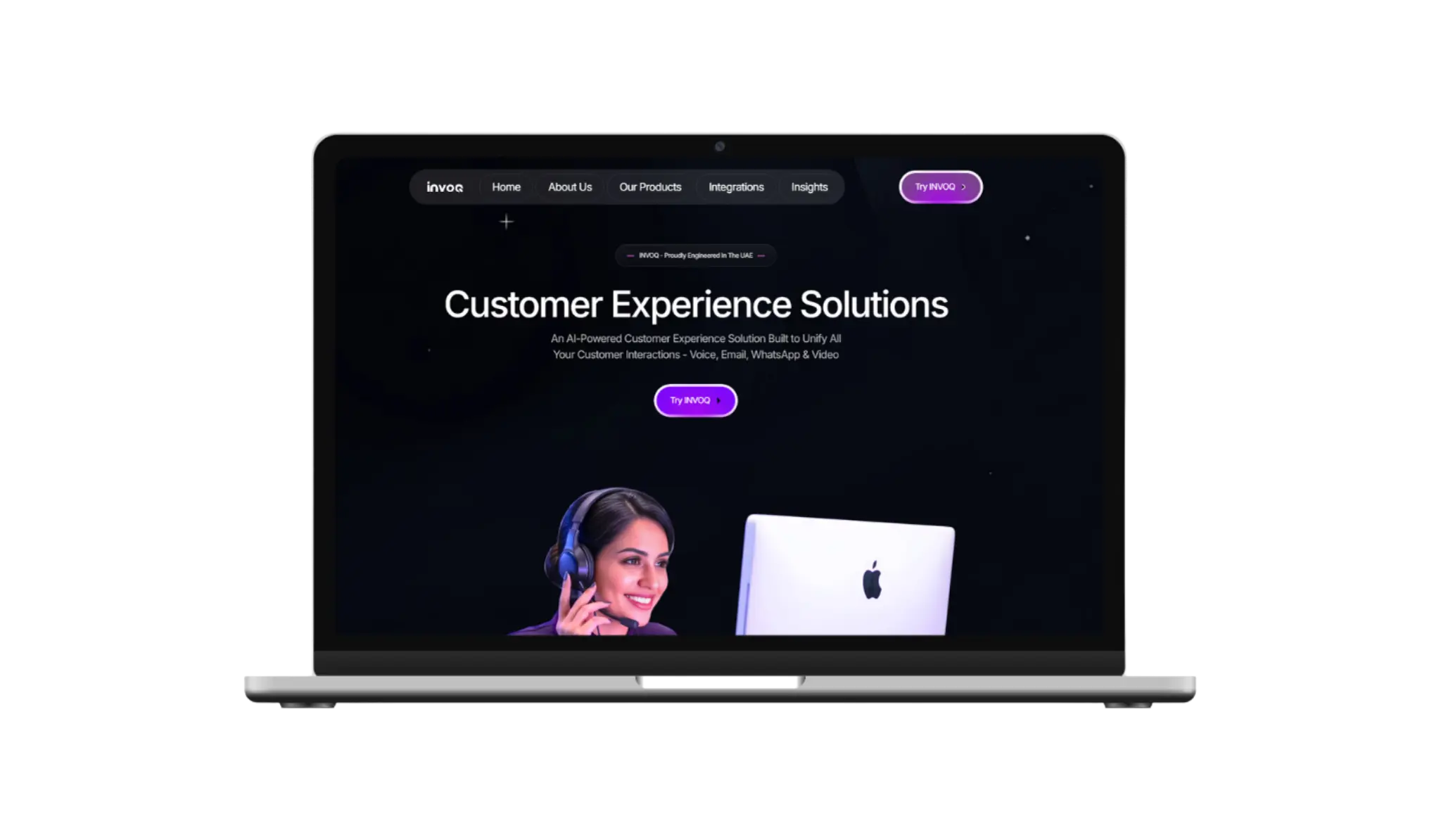
At INVOQ, communication is seen as the core of customer experience.
By combining:
Omnichannel communication
AI-powered automation
Flexible deployment options
INVOQ helps businesses:
Manage conversations more effectively
Deliver consistent customer experiences
Empower teams with better tools and insights
For businesses in the MENA region, where digital transformation is accelerating, this approach helps stay ahead in a competitive market.
Contact us to see how INVOQ can give an
effortless experience for your customers